
Now Pay Online
Consumers can now pay their water bills online; view current and previous bills; billing dates; gallons used; amount billed; and payment due date at www.lakehurstwater.org.
There is a user fee of $2.50 per transaction for online payments. We accept Visa, MasterCard, Discover and E-checks for your convenience.
For all concerns and questions and in case of an emergency call the district’s main office number 24 hours a day at 303-985-7895. Calls received outside normal working hours will be answered by the district’s answering service and the information will be directed to on call service personnel for assistance.
Lakehurst Water and Sanitation District
William “Jake” Schild, President
Steven Posavec, Vice President
Gail Sevier, Treasurer
Mike Cochran, Secretary
Keith Francis, Assistant Secretary
DISTRICT MANAGER
Steve Daldegan
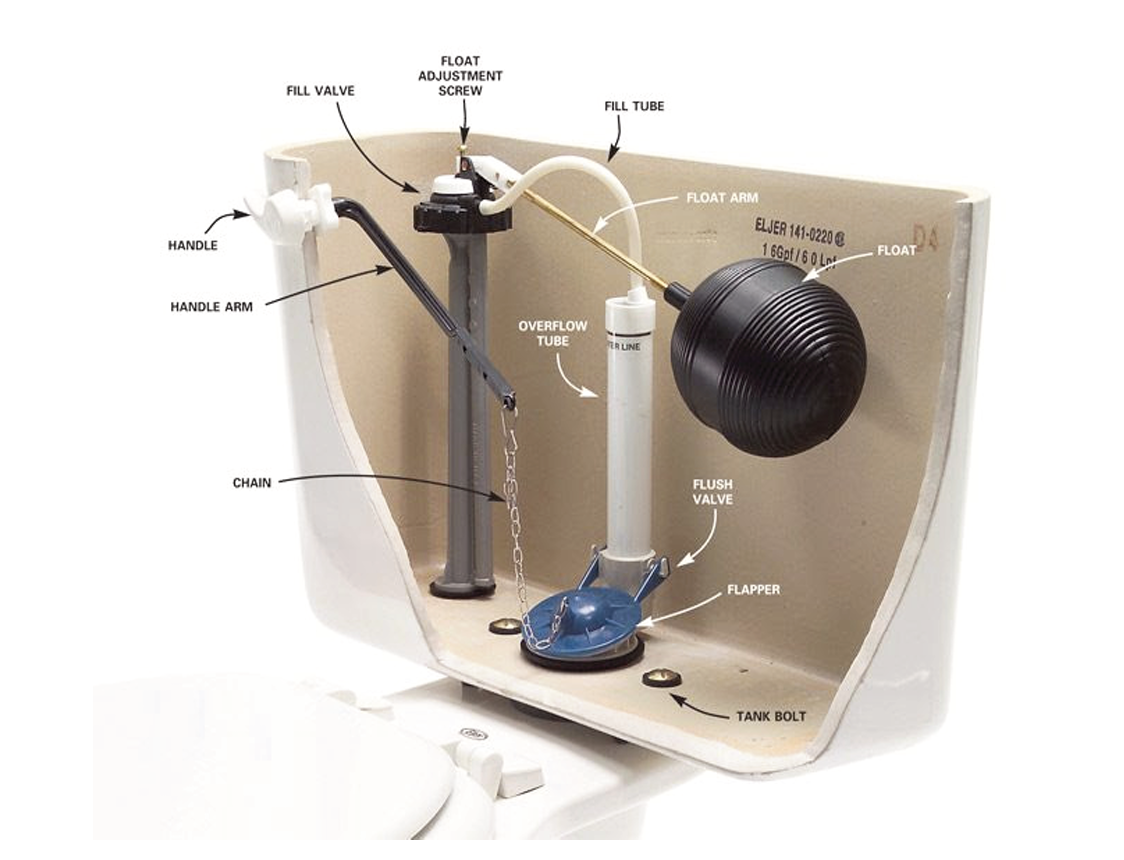
Repair A Leaky Toilet
Even a small leak can waste a significant amount of water over time. Use this guideline to make sure your toilets are working properly and not wasting water.
It’s not always easy to tell if your toilet is leaking. To check for a slow leak, add some food coloring or dye tablets to the water inside the tank and wait 5 to 10 minutes. If the color seeps into the toilet bowl, you have a leak. To repair the leak, follow these steps:
Step 1: Remove the tank lid and check the float arm. Reach in and lift it up. If the water stops running, you’ve found the problem. Adjust the screws or bolts to the inlet float valve until the water stops flowing.
Step 2: If the toilet continues to leak, turn off the water supply valve to the tank, and flush the toilet to drain out the water. Examine the inlet float valve by removing the two screws or bolts and lifting the top of the valve housing out. Check the diaphragm. If it’s slightly damaged or worn, replace it.
Step 3: If the toilet periodically refills without flushing, examine the ball stopper or flapper valve. It should fit flush in its seat. If not, look at the lever and guide rods that operate the ball stopper. If they are crooked, gently straighten them. For toilets with a chain pull attached to the flapper valve, make sure the chain is slack when the valve is seated to ensure a snug fit. If the ball or flapper valve itself is worn out, replace it. Check for corrosion or deposits on the seat and the ball stopper or flapper valve. Use steel wool to remove this buildup.
Step 4: Inspect the small refill tube that connects the fill valve to the refill-overflow tube to be sure the smaller tube ends slightly above the standing water level of the filled tank. If necessary, gently pull the small tube upward until its end is correctly placed.
Step 5: If the toilet is still leaking, you may have a problem with the fill valve. In this case, a steady trickle of water will run constantly, flowing into the overflow tube in the toilet tank. If the water level in the tank is up to the top of the overflow tube, you probably have a fill valve problem. First, try to adjust the float level so the water stops flowing before reaching the overflow level.
Step 6: If that doesn’t stop the leak, replace the fill valve. Shut off the water supply to the toilet and flush to empty the tank. Sponge the final few cups of water from the bottom of the tank. Disconnect the supply line and remove the nut on the bottom of the tank to remove the old fill valve assembly. Install a new fill valve assembly and reattach the supply line. Finally, attach the fill tube hose to the overflow tube. Turn the water back on and adjust the float so that the water shuts off about 1 inch below the top of the overflow tube.
Landlord\Tenant Water Service Policy
1. Landlords. A landlord may add and remove tenants to and from an account. Lakehurst Water will add tenants to accounts, invoice tenants, and accept payment from tenants. However, landlords are ultimately responsible to Lakehurst for any unpaid water and/or sewer service charges. Until paid, Lakehurst Water has a lien against the property served for delinquent water and sewer bills. All discrepancies between the owner and tenant regarding any portion of a bill or unpaid balance on an account must be resolved between the owner and tenant.
2. Payment Arrangements. If a customer falls behind with payments, they may be eligible for one payment plan arrangement per year. Payment plans can only be set up thru the District Manager. If a tenant fails to abide by a payment arrangement, the service will be shut off and a suspension fee applied. Service will not be restored until the outstanding balance has been satisfied in full.
3. Proration of Bills. Lakehurst Water is unable to prorate water bills. Landlords and tenants are responsible for proration of any water bills.
4. Billing. Lakehurst Water will send water service bills to the premises/occupant. Lakehurst Water will send Landlords a notice if the account is past due.
5. Account Balances. Upon entering a lease with a tenant, landlords (if they want the tenant to pay the bill) are advised to complete an online rental transfer form at www.lakehurstwater.org. The rental transfer form needs to be completed upon the entering and exiting of tenants.
System Rehabilitation Projects Scheduled for 2023
Lakehurst’s Board of Directors have included several new rehabilitation projects in the 2023 budget. These projects are needed to provide a more reliable water system now and in the future. Estimated budget costs are included with the projects listed below.
Water and Sewer Projects for next year include:
- Replacing five, old, non-repairable fire hydrants with newer models. $50,000
- Phase 3 of the West Quincy Avenue Jefferson County roadway expansion project, to include the replacement and relocation of approximately 2,500 feet of 12-inch water line between S. Beach Way and S. Eldridge St. $1,000,000
- Zone 3 Emergency water connection on S. Marlowe Ave. Replace 3 existing 20-inch valves on S. Alkire St. $595,000
- Rehabilitate 4,800 feet of various size sewer pipe in several locations thru-out the district. $450,000
Winter Watering Tips for Trees and Shrubs
Trees and shrubs need a little extra water to get through winter’s dry spells. Winter in Denver includes snow and cold, but long dry stretches and warm temperatures are not unusual. During those times, your trees and shrubs need a helping hand from you. The occasional hand-watering of trees and shrubs in the winter is helpful. Watering during dry stretches, when there’s been no significant precipitation for about three weeks, will prevent root damage that affects the health of the entire plant. Water only when air and soil temperatures are above 40 degrees with no snow cover. Established large trees have a root spread equal to or greater than the height of the tree. Apply water to the most critical part of the root zone within the dripline. Apply water at mid-day so that it will have time to soak in before possible freezing at night. A solid layer (persisting for more than a month) of ice on lawns can cause suffocation or result in matting of the grass.